
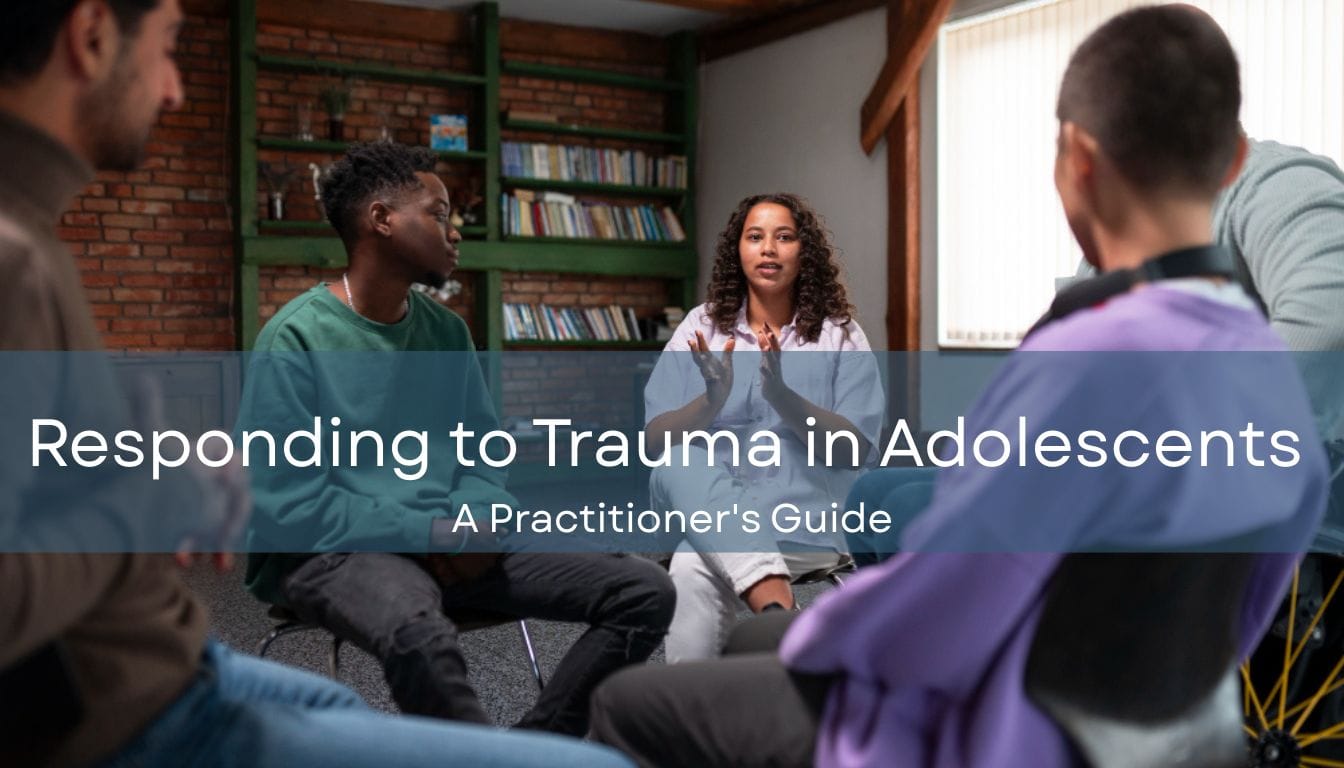
Responding to Trauma in Adolescents: A Practitioner’s Guide

Wishlist Share
Share Course
Page Link
Share On Social Media

About Course

This course equips mental health professionals with the knowledge and practical strategies to identify trauma responses in adolescents, communicate safely, and apply supportive interventions. You will learn to recognize behavioral, emotional, and physiological signs of trauma, understand its impact on brain development, and utilize trauma-informed communication. The course also covers safeguarding, referral pathways, and essential self-care practices.

What Will You Learn?

  • You will learn how to recognise trauma responses in young people.
  • You will understand how trauma affects behaviour, communication, and safeguarding.
  • You will develop trauma-informed communication and regulation skills.
  • You will learn how to apply grounding strategies to support dysregulated adolescents.
  • You will gain confidence in identifying when trauma becomes a safeguarding concern.
  • You will understand how to record concerns clearly and escalate them appropriately.
  • You will build stronger professional boundaries to protect your own wellbeing.
  • You will develop reflective habits that improve long-term practice.

Course Content

Welcome: Understanding Adolescent Trauma
Welcome to this crucial training on responding to trauma in adolescents. We'll begin by setting the stage, defining trauma within the adolescent context, and exploring what trauma might look like in your professional setting. Your insights are invaluable as we embark on this journey to equip you with the knowledge and confidence to support young people effectively. Get ready to dive into the core concepts that underpin trauma-informed practice.

  • What Trauma Means in Adolescence
  • Why Trauma-Informed Practice Matters
  • Reflection Activity (Self-Guided)

Module 2: Understanding Adolescent Trauma
This module introduces the main causes of trauma in adolescence and explores the difference between individual and collective traumatic experiences. Learners will gain a clear understanding of the Fight, Flight, Freeze and Fawn responses and how these show up in young people. The module includes a short video, a case vignette with guided questions, and a brief reflection on how trauma has affected adolescents in your own practice.

Module 3: Recognising Trauma Responses
This module introduces the key ways trauma shows up in adolescents. Learners explore behavioural, emotional, cognitive and physiological indicators — from withdrawal and overwhelm to dissociation or shutdowns. The session also focuses on understanding the difference between “won’t” behaviour and “can’t” behaviour, helping practitioners recognise when a young person is struggling rather than refusing.

Module 4: Trauma-Informed Communication & Practice
Module 4 explores trauma-informed communication through relationship-based practice, regulating before responding, and using non-triggering language. Learners review key do’s and don’ts, watch a demonstration video, and practise grounding tools like the 5-4-3-2-1 method and calming breathwork to support safer, more effective interactions with adolescents.

Module 5: Safeguarding & Escalation
This module explores when trauma-related behaviours become safeguarding concerns and how practitioners can identify key indicators for referral. Learners are guided through safe, sensitive responses to disclosures and how to record concerns clearly, factually, and without judgement. The session outlines multi-agency pathways, ensuring staff know who to contact and when. The activity tasks learners with writing a concise safeguarding note based on a scenario, reinforcing accurate reporting and appropriate escalation.

Module 6 Summary: Professional Boundaries & Self-Care
This module explores how working with trauma-exposed individuals can impact practitioners emotionally, mentally, and physically. It introduces vicarious trauma and compassion fatigue, helping learners recognise the early signs—such as exhaustion, irritability, reduced empathy, and difficulty switching off after work. The session emphasises the importance of managing emotional labour by creating clear, consistent professional boundaries that protect both the practitioner and the young person.Learners also explore what healthy boundaries look like in trauma-informed practice, including clarity around roles, time, communication, and emotional availability. The module highlights how strong boundaries promote safety, consistency, and trust. Practical self-care strategies are introduced, focusing on simple, sustainable habits such as grounding, reflective supervision, routine breaks, and creating emotional “reset” moments after challenging interactions.The module ends with a guided reflection: “One boundary I need to strengthen is…”

Module 7: Summary & Next Steps
This final module brings together the core learning from the course, highlighting key trauma-informed principles and practical strategies to use in real settings. Learners can download resources to support continued development and complete a short quiz and scenario-based assessment to test understanding. The module ends with a reflective prompt—“What will you apply in your role going forward?”—encouraging learners to embed the training into everyday practice. A recommended pass mark of 70% ensures competence.

Earn a certificate

Add this certificate to your resume to demonstrate your skills & increase your chances of getting noticed.
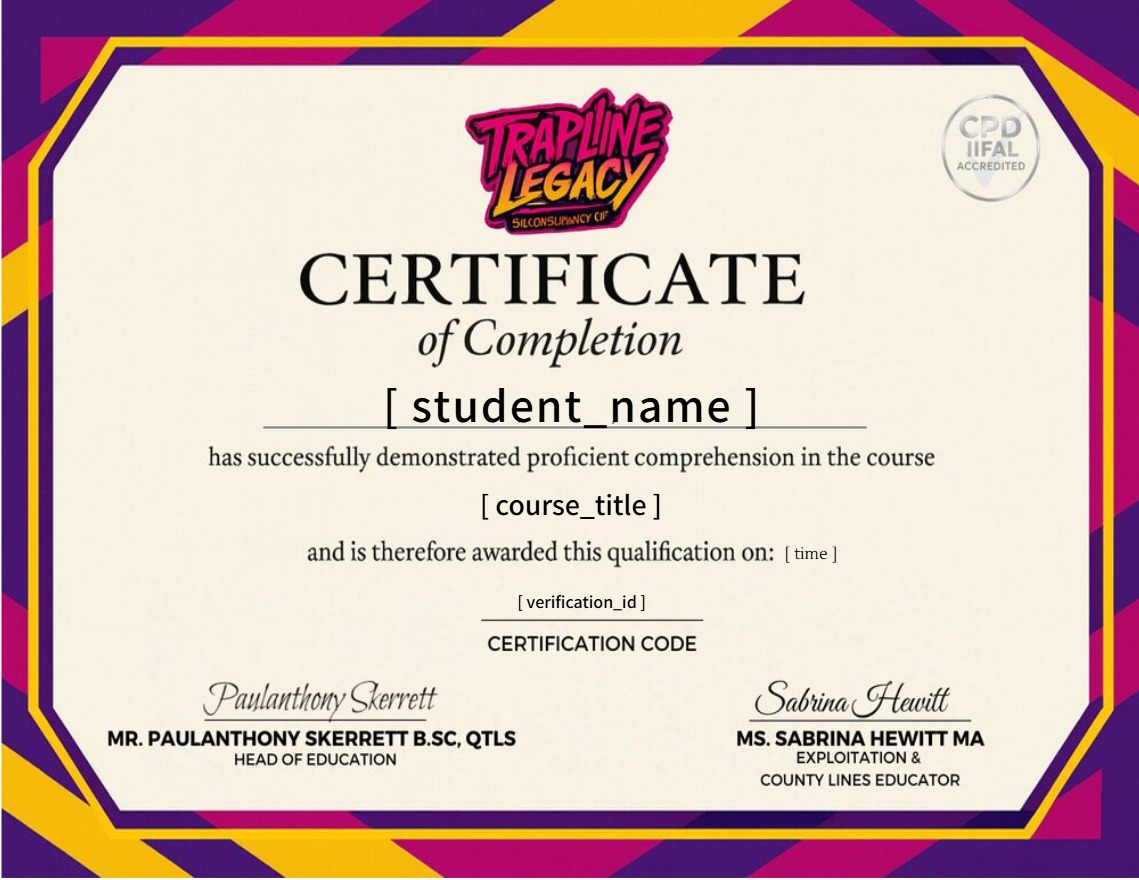
selected template

Student Ratings & Reviews

No Review Yet
No Review Yet