

PACE Training Essentials

Wishlist Share

About Course

The PACE Training Essentials course is designed to equip educators, foster carers, residential workers, and child-facing professionals with a practical, trauma-informed approach to building safe and trusting relationships with children and young people.

Rooted in the PACE framework developed by Dr Dan Hughes, this course explores how relational approaches can transform responses to behaviour, particularly for children who have experienced trauma, attachment disruption, or emotional dysregulation.

Rather than focusing on control or compliance, this course develops the skills needed to prioritise connection, co-regulation, and emotional safety in everyday practice.

What Will You Learn?

  • Understand the PACE framework and how it supports trauma-informed practice in education and care settings
  • Apply Playfulness, Acceptance, Curiosity and Empathy in real-life interactions with children and young people
  • Develop confidence in de-escalating behaviour through relational and emotionally safe communication
  • Recognise behaviour as communication and respond to underlying emotional needs rather than surface behaviour
  • Build stronger, more trusting relationships with children through consistent relational practice
  • Use PACE strategies to support emotional regulation, connection, and co-regulation in challenging situations
  • Reflect on your own practice to improve professional responses and relational effectiveness

Course Content

MODULE 1: Introduction to PACE and Trauma-Informed Practice
PACE is a relationship-based framework that helps adults create safety through connection, enabling children to regulate emotions and engage more positively.

  • Lesson 1.1: Understanding the PACE Framework
  • Lesson 1.2: Origins of PACE (Dr Dan Hughes)
  • Lesson 1.3: What PACE Stands For
  • Lesson 1.4: Why PACE Is Used in Education and Care Settings
  • Lesson 1.5: Core Purpose – Building Safety and Trust
  • Module 1 Knowledge Check Introduction to PACE and Trauma-Informed Practice

MODULE 2: Playfulness and Acceptance in Practice
This module explores two of the core relational principles within the PACE framework: Playfulness and Acceptance.Learners will develop a deeper understanding of how tone, language, and emotional stance can be used to reduce tension, build trust, and support emotional regulation in children and young people.The module focuses on how adults can remain emotionally available and relationally connected, even during moments of distress or behavioural escalation.By the end of this module, learners will be able to apply playfulness appropriately, use acceptance without judgement, and maintain strong relational boundaries that support emotional safety and positive behaviour outcomes.

MODULE 3: Curiosity and Empathy in Practice
This module focuses on the final two principles of the PACE framework: Curiosity and Empathy.Learners will explore how curiosity supports a shift from reactive responses to reflective understanding, helping adults interpret behaviour as communication rather than defiance. The module also develops the skill of empathy as a key relational tool for building trust, validating emotional experience, and supporting co-regulation.Together, curiosity and empathy enable practitioners to respond to children and young people in ways that promote emotional safety, strengthen relationships, and reduce escalation during moments of distress.By the end of this module, learners will be able to use curiosity and empathy effectively in real-time interactions to support regulation, connection, and positive behavioural outcomes.

MODULE 4: Applying PACE in Real Settings
This module focuses on the practical application of the PACE framework in real-world environments, including classrooms, residential care, and one-to-one support settings.Learners will explore how to apply Playfulness, Acceptance, Curiosity, and Empathy during everyday interactions, particularly in moments of emotional escalation or behavioural challenge.The module develops confidence in using PACE strategies in real time, including de-escalation techniques, relational communication, and responses to complex behaviour.By the end of this module, learners will be able to apply PACE effectively in practice, manage challenging situations with confidence, and create emotionally safe environments that support regulation and engagement.

MODULE 5: Embedding PACE in Practice
This module explores how to embed the PACE framework consistently across teams, settings, and professional practice.It focuses on developing a whole-setting approach where all staff use consistent language, responses, and relational strategies to support children and young people.Learners will also explore reflective practice, emotional awareness, and continuous professional development to ensure PACE is sustained over time rather than used as an isolated intervention.By the end of this module, learners will be able to contribute to a consistent relational culture, support team alignment, and embed trauma-informed practice across their setting.

MODULE 6: Assessment and Implementation
This final module brings together learning from the entire course and focuses on applying PACE knowledge in structured, practical ways.Learners will analyse real-life case studies, identify appropriate PACE responses, and develop their own implementation plan for using PACE within their professional setting.The module also supports learners in translating theory into practice through reflective application and action planning.By the end of this module, learners will be able to demonstrate understanding of the PACE framework, apply it confidently in real scenarios, and implement a sustainable plan for ongoing practice and development.

Earn a certificate

Add this certificate to your resume to demonstrate your skills & increase your chances of getting noticed.
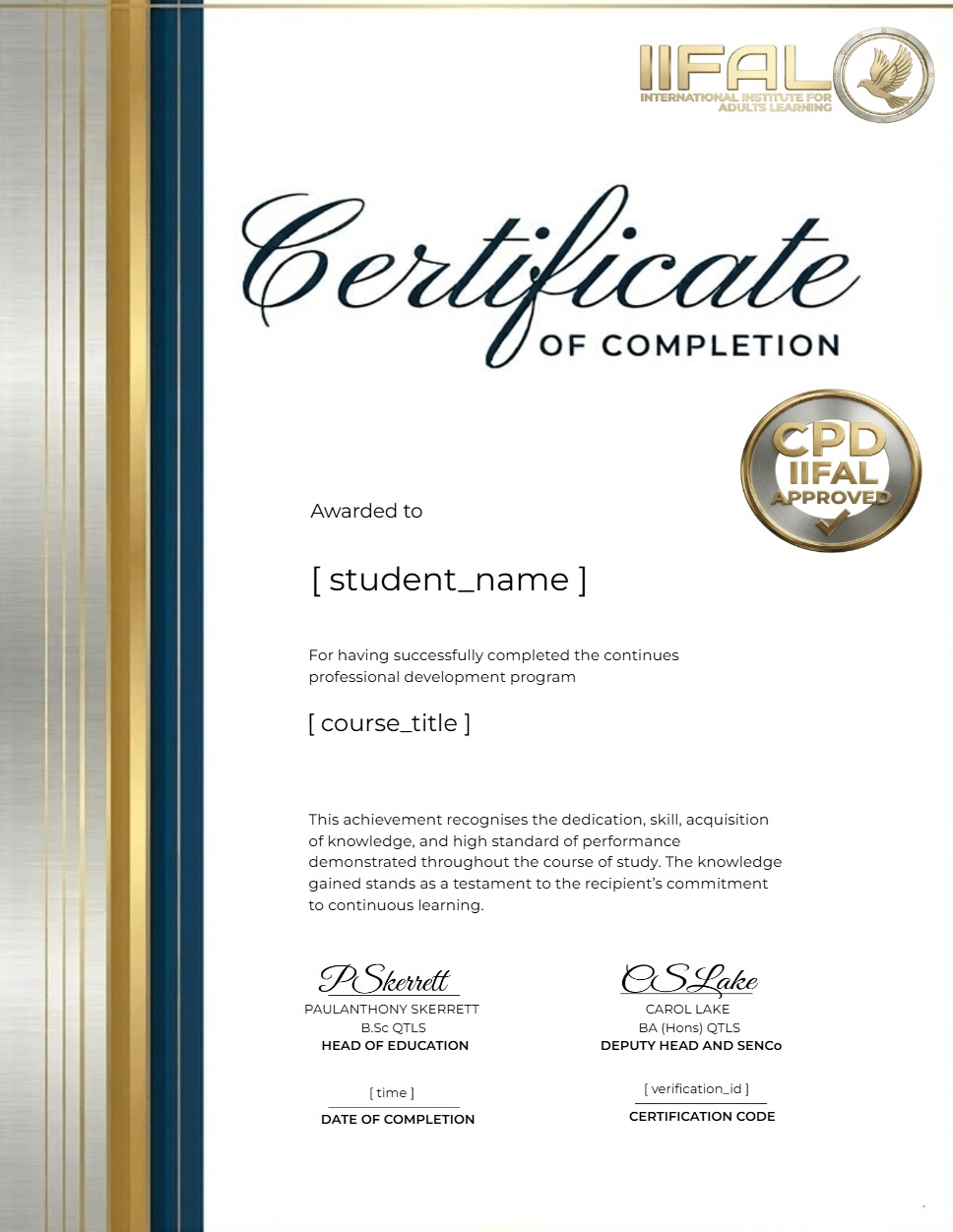
selected template

Student Ratings & Reviews

No Review Yet
No Review Yet