
Core Foundation for Teaching

Wishlist Share
Share Course
Page Link
Share On Social Media

About Course

The Core Foundation for Teaching course is designed for Teaching Assistants, Learning Mentors, and education support professionals who are taking on additional teaching responsibilities, moving into a teaching role, or considering progression into teaching or training positions.

Building on participants’ existing experience in learning environments, this course develops core teaching skills, confidence, and professional understanding to lead learning effectively. Learners will enhance their ability to plan and deliver structured250 lessons, explain concepts clearly, select suitable teaching methods, manage behaviour positively, and use assessment to support learner progress.

The programme also covers pastoral and safeguarding responsibilities, including first encounters with a class, the role of the form tutor, and effective teamwork within pastoral systems. Emphasis is placed on inclusive practice, professional boundaries, and promoting learner wellbeing across schools, further education, training, and adult learning contexts.

By the end of the course, learners will be prepared to step confidently into teaching responsibilities, support learning independently where appropriate, and progress towards recognised teaching qualifications or further teacher training pathways.

CPD Awarded: 9 hours / 9 CPD points

Show More

What Will You Learn?

  • Understand how to create effective, learner-focused lesson plans
  • Communicate ideas clearly using appropriate explanations, examples, and questioning techniques
  • Apply a variety of teaching methods to engage and motivate learners
  • Manage behaviour positively and respond to challenging situations professionally
  • Use assessment to monitor and support learner progress
  • Build rapport and establish professional presence when first meeting a class
  • Understand the pastoral role of a form tutor and work effectively within a pastoral team
  • Recognise safeguarding responsibilities and act to protect children and vulnerable learners

Course Content

Module 1: Lesson Planning
Module 1: Lesson Planning focuses on developing the essential skills needed to plan effective, purposeful, and inclusive lessons. Learners will explore the importance of lesson planning in supporting learner progress, maintaining structure, and ensuring learning objectives are met. The module covers how to write clear learning aims and outcomes, structure lessons effectively using starters, main activities, and plenaries, and manage time to maintain pace and engagement throughout a session.Learners will also examine differentiation and inclusive planning strategies to ensure lessons meet the needs of diverse learners. By the end of this module, learners will be able to design well-structured lesson plans that are engaging, inclusive, and aligned with curriculum requirements, supporting positive learning outcomes for all learners.

  • Lesson 1.1: Purpose and importance of lesson planning
  • Lesson 1.2: Writing clear learning aims and outcomes
  • Lesson 1.3: Structuring a lesson (starter, main activities, plenary)
  • Lesson 1.4: Differentiation and inclusive planning
  • Lesson 1.5: Time management and sequencing learning
  • Module 1: Lesson Planning – Knowledge Check (True/False)

Module 2: Explaining & Explanations
Module 2: Explaining & ExplanationsModule 2 focuses on developing the skills needed to communicate ideas and concepts clearly and effectively. Learners will explore the characteristics of effective explanations, including clarity, accuracy, and relevance, and learn how to adapt their language to suit different learner levels.The module also covers a range of questioning techniques to check understanding and encourage engagement, as well as the use of examples, analogies, and demonstrations to make learning accessible and memorable. Additionally, learners will develop strategies to manage pace and clarity, ensuring that explanations are structured, understandable, and responsive to learner needs.By the end of this module, learners will be able to explain concepts confidently, adjust their communication to suit diverse learners, and use teaching techniques that support understanding and retention.

Module 3: Teaching Methods & Styles
This module explores the differences between teacher-centred and learner-centred approaches, helping participants understand how to balance instruction and facilitation. It highlights the importance of recognising learners’ styles and preferences to tailor teaching effectively. Participants will explore active learning strategies, including group work, discussions, and independent learning, to enhance engagement and participation. The module also emphasises inclusive and adaptive practices, ensuring lessons are accessible and responsive to all learners.Learning Outcome: Learners will be able to select and apply appropriate teaching methods to engage learners effectively and support diverse learning needs.

Module 4: Behaviour Management
This module explores how learners behave in educational settings and equips participants with the skills to manage behaviour effectively. It covers understanding behaviour, establishing clear expectations and ground rules, and applying positive behaviour management strategies. Participants will also learn de-escalation techniques and professional approaches to managing challenging behaviour.Learning Outcome: Learners will be able to apply positive behaviour management techniques to create a safe, respectful, and productive learning environment.

Module 5: Assessment for Learning
This module explores how assessment supports learning and improves learner progress. It covers the purpose of assessment, distinguishing between formative and summative approaches, and the importance of providing constructive feedback. Participants will also learn how to track learner progress effectively and use assessment information to inform and adapt teaching.Learning Outcome: Learners will be able to use assessment methods strategically to support learning, monitor progress, and promote learner achievement.

Module 6: First Encounters with a Class
This module prepares learners for their first experience of meeting and teaching a class. It focuses on effective preparation, establishing a professional presence, and setting clear expectations and routines from the outset. Participants will explore strategies for building positive rapport with learners, managing nerves, and developing confidence to create a welcoming and well-structured learning environment.Learning Outcome: Learners will be able to demonstrate confidence, professionalism, and effective classroom presence when teaching a class for the first time.

Module 7: Role of the Form Tutor & Pastoral Team
This module explores the pastoral responsibilities involved in supporting learners beyond academic learning. It introduces the role of the form tutor in promoting learner wellbeing, maintaining effective communication with parents, carers, and other stakeholders, and following appropriate referral and record-keeping procedures. Learners will also examine the importance of working collaboratively as part of a pastoral team to provide consistent, holistic support for learners.Learning Outcome: Learners will understand the pastoral responsibilities involved in supporting learners holistically.

Module 8: Child Protection & Safeguarding Policy
This module provides an essential understanding of safeguarding responsibilities in educational settings. It covers key UK safeguarding legislation and guidance, how to recognise signs of abuse and neglect, and the correct procedures for reporting and recording concerns. Participants will also explore maintaining professional boundaries and learn about IIFAL safeguarding procedures, ensuring learners are aware of their role in protecting children and vulnerable individuals.Learning Outcome: Learners will understand their legal and professional responsibilities in safeguarding children and vulnerable learners.

Final Assessment – Core Foundation for Teaching
This assessment evaluates learners’ understanding of the full Core Foundation for Teaching course. Covering all modules—including lesson planning, teaching methods, behaviour management, assessment, first encounters with a class, pastoral responsibilities, and safeguarding—learners can demonstrate their knowledge, application, and professional understanding. A score of 70% or higher is required to achieve the Certificate of Completion. Detailed explanations are provided for each question to support self-paced learning and reinforce key concepts.

Earn a certificate

Add this certificate to your resume to demonstrate your skills & increase your chances of getting noticed.
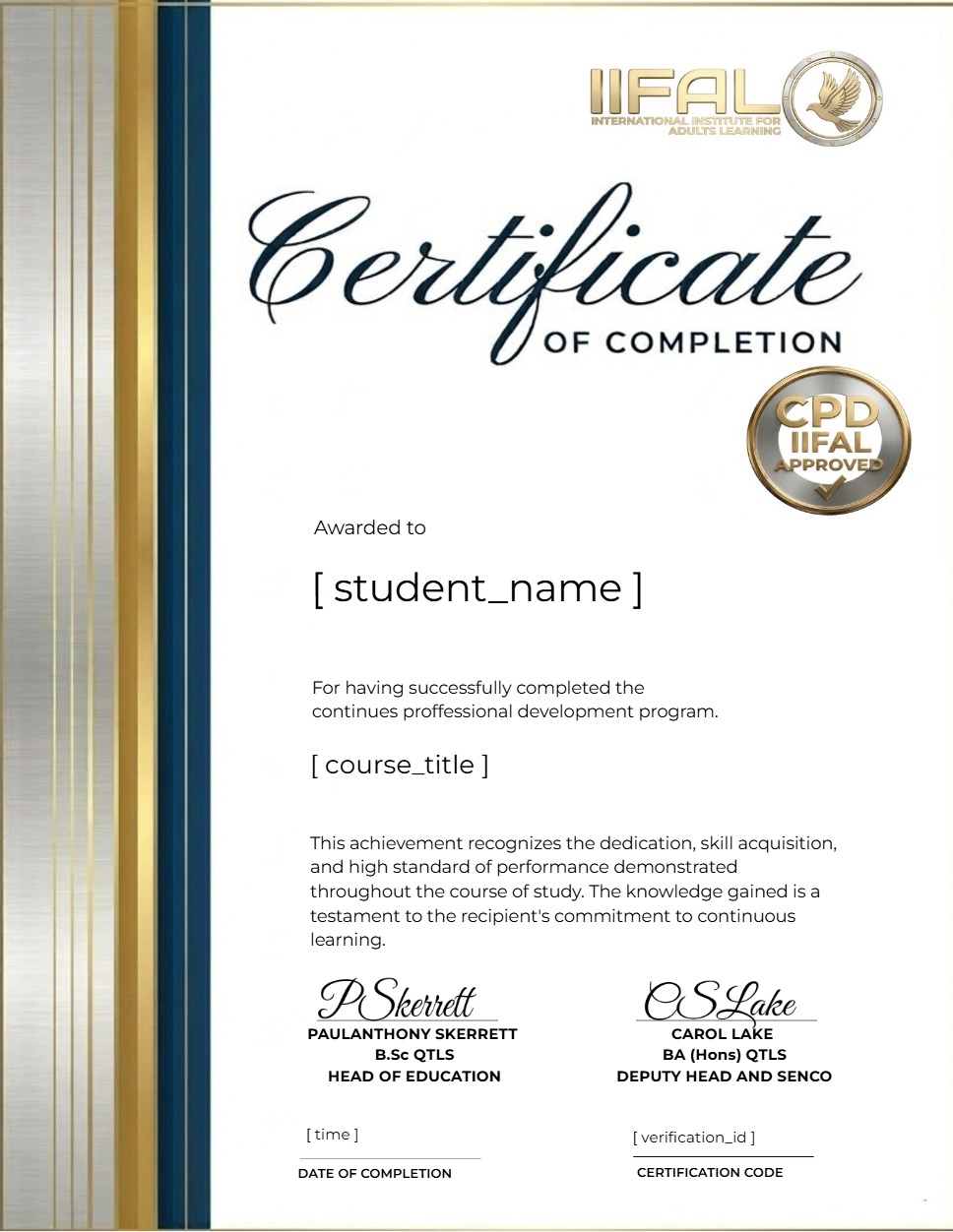
selected template

Student Ratings & Reviews

No Review Yet
No Review Yet