
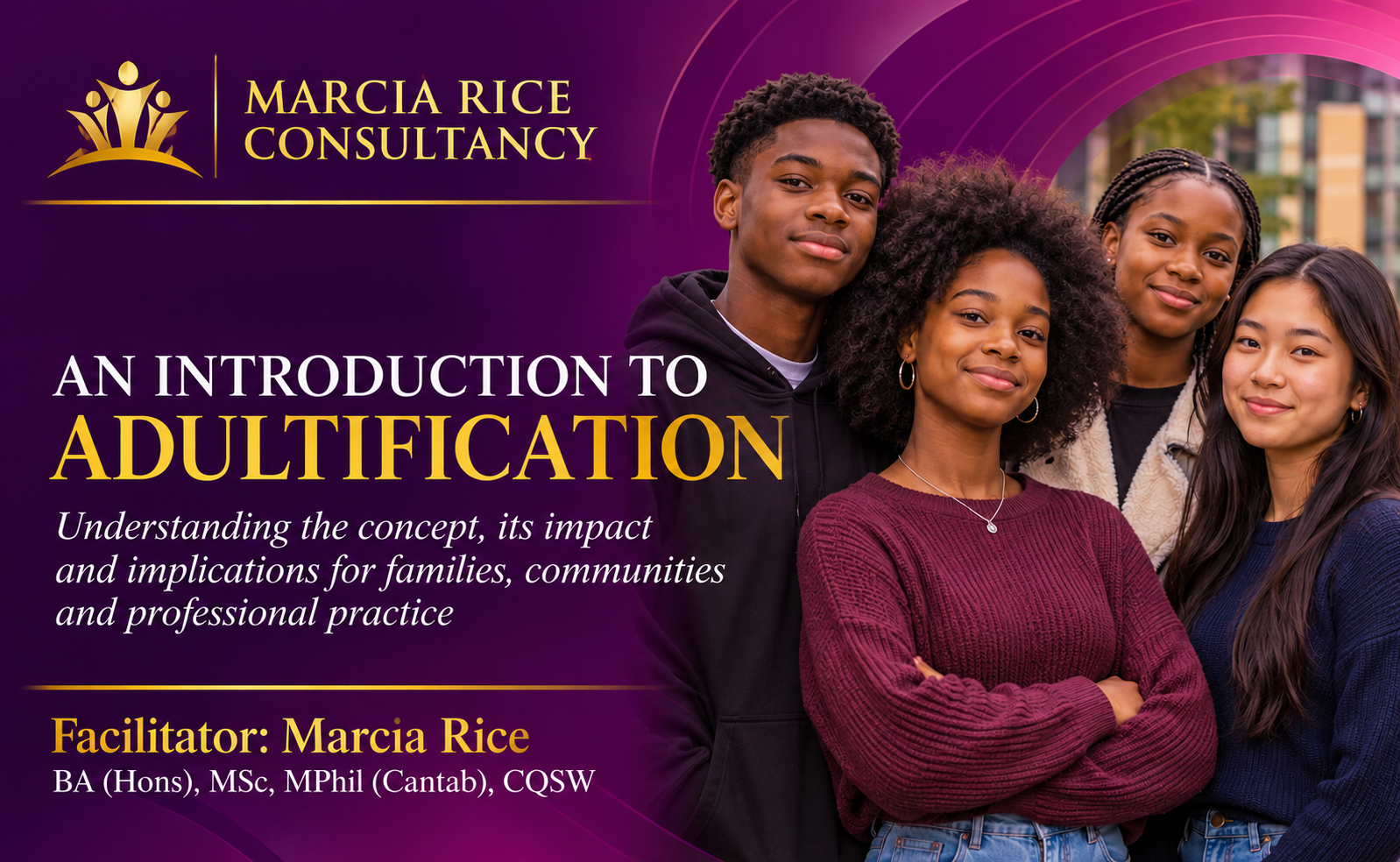
About Course
1-hour taster CPD – a free introduction from trainer Marcia Rice.
Why are some children treated as older, tougher and less in need of protection than they really are – and why does this happen most often to Black children? This short, self-paced course introduces adultification: what it is, how it shows up in everyday practice, and why it matters for safeguarding.
You will explore the key tenets of adultification, the racialised stereotypes that put Black boys and girls at greater risk, and Marcia Rice’s spheres of oppression model. You will then apply your learning to the widely reported Child Q case and see what the review found.
The course is interactive throughout, with short knowledge checks to help you learn as you go. It ends with a final assessment – pass with 70% or more (up to three attempts) to complete your CPD.
This taster is an introduction. Marcia Rice’s full-day course goes much further – into intersectionality, the Professional Inter-Adultification Model, case study analysis, the THRIVE model and action planning for your own organisation.
Course Content
Module 1: Getting Started
Lesson 1.1: Welcome to Your Taster CPD
Lesson 1.2: Before We Begin – What Do You Already Think?
Module 2: What Is Adultification?
Module 3: Who Is Most at Risk – and Why?
Module 4: Learning from Child Q
Module 5: Next Steps
Final Assessment
Earn a certificate
Add this certificate to your resume to demonstrate your skills & increase your chances of getting noticed.
Student Ratings & Reviews
