


4.00
(1 Rating)

Suicide Awareness Training

Wishlist Share

About Course

Suicide Awareness Training is a short, practical online course designed to help you recognise when someone may be struggling with thoughts of suicide, feel more confident starting a conversation, and understand what to do next.

The course takes approximately 30 minutes and is suitable for anyone aged 16 and over.

You will learn how to:

  • understand suicide and suicidal thoughts
  • recognise common risk factors and warning signs
  • approach someone you are concerned about
  • ask about suicide in a calm and direct way
  • listen without judgement
  • respond appropriately when someone discloses suicidal thoughts
  • understand the importance of confidentiality and professional boundaries
  • connect someone with appropriate support
  • recognise when concerns need to be escalated

Through short lessons, practical examples and realistic scenarios, the course focuses on what you can actually do when you are worried about someone.

You do not need previous knowledge or professional experience to take this course.

Important: This course provides suicide awareness education. It does not provide clinical training, diagnose mental health conditions or qualify you to conduct a suicide risk assessment. Where there is an immediate concern about someone’s safety, appropriate emergency or professional support should be sought.

Show More

What Will You Learn?

  • Understand what suicide and suicidal thoughts mean.
  • Recognise factors that may increase someone's vulnerability.
  • Identify possible warning signs of suicide.
  • Notice changes in someone's behaviour that may cause concern.
  • Learn how to start a supportive conversation with someone you are worried about.
  • Learn how to ask about suicide calmly and directly.
  • Develop listening skills that allow someone to speak without judgement.
  • Understand how to respond when someone shares suicidal thoughts.
  • Understand confidentiality and appropriate boundaries.
  • Identify appropriate sources of support.
  • Recognise when concerns should be escalated.
  • Understand that you do not have to manage someone's situation alone.

Course Content

Module 1 — Understanding Suicide
Suicide is a complex issue that can affect people of all ages and backgrounds. In this module, you will develop a basic understanding of suicide, suicidal thoughts and suicidal behaviour. You will also explore why someone may experience thoughts of suicide and why there is rarely one single explanation.The aim is not to make you an expert in suicide prevention. It is to help you recognise the subject, understand some of the language used and feel better prepared to respond with compassion when someone may be struggling.

  • Lesson 1.1 — Welcome to Suicide Awareness Training
  • Lesson 1.2 — Understanding Suicide
  • Module 1 — True or False Knowledge Check

MODULE 2 — Recognising the Signs
Sometimes a person who is struggling may not directly tell us that they are thinking about suicide. Changes in what they say, how they behave or how they relate to other people may provide important reasons to check in with them.In this module, you will explore factors that may increase vulnerability to suicidal thoughts and some of the warning signs that may indicate someone is experiencing significant distress.You will also learn about protective factors — the relationships, circumstances and sources of support that can help people cope during difficult periods.

MODULE 3 — Starting the Conversation
Starting a conversation about suicide can feel uncomfortable, especially when you are worried about saying the wrong thing. However, a calm and compassionate conversation can give someone an opportunity to talk about what they are experiencing and connect with appropriate support.In this module, you will learn a simple approach for starting a conversation, how to ask directly about suicide, and how to respond when someone shares something difficult.The aim is not to have the perfect words. It is to be present, listen and take the person seriously.

MODULE 4 — What Do You Do Next?
Knowing how to start a conversation is important, but what happens afterwards matters just as much.When someone tells you they are experiencing suicidal thoughts, you may feel responsible for knowing exactly what to do. You may also worry that saying or doing the wrong thing could make the situation worse.You are not expected to solve the person's problems, provide therapy or determine their level of suicide risk.Your role is to listen, offer appropriate support, connect the person with help and escalate concerns when necessary.This module will help you understand your boundaries, identify sources of support and respond appropriately to requests for secrecy.

Final Assessment — Suicide Awareness Training
This final assessment checks your understanding of the key points covered throughout the IIFAL Suicide Awareness Training.The questions are based on what you have learned about understanding suicide, recognising warning signs, starting a conversation, listening without judgement, connecting someone with appropriate support and knowing when to seek further help.There are 10 multiple-choice questions. Choose the one best answer for each question.Suggested pass mark: 80%

Earn a certificate

Add this certificate to your resume to demonstrate your skills & increase your chances of getting noticed.
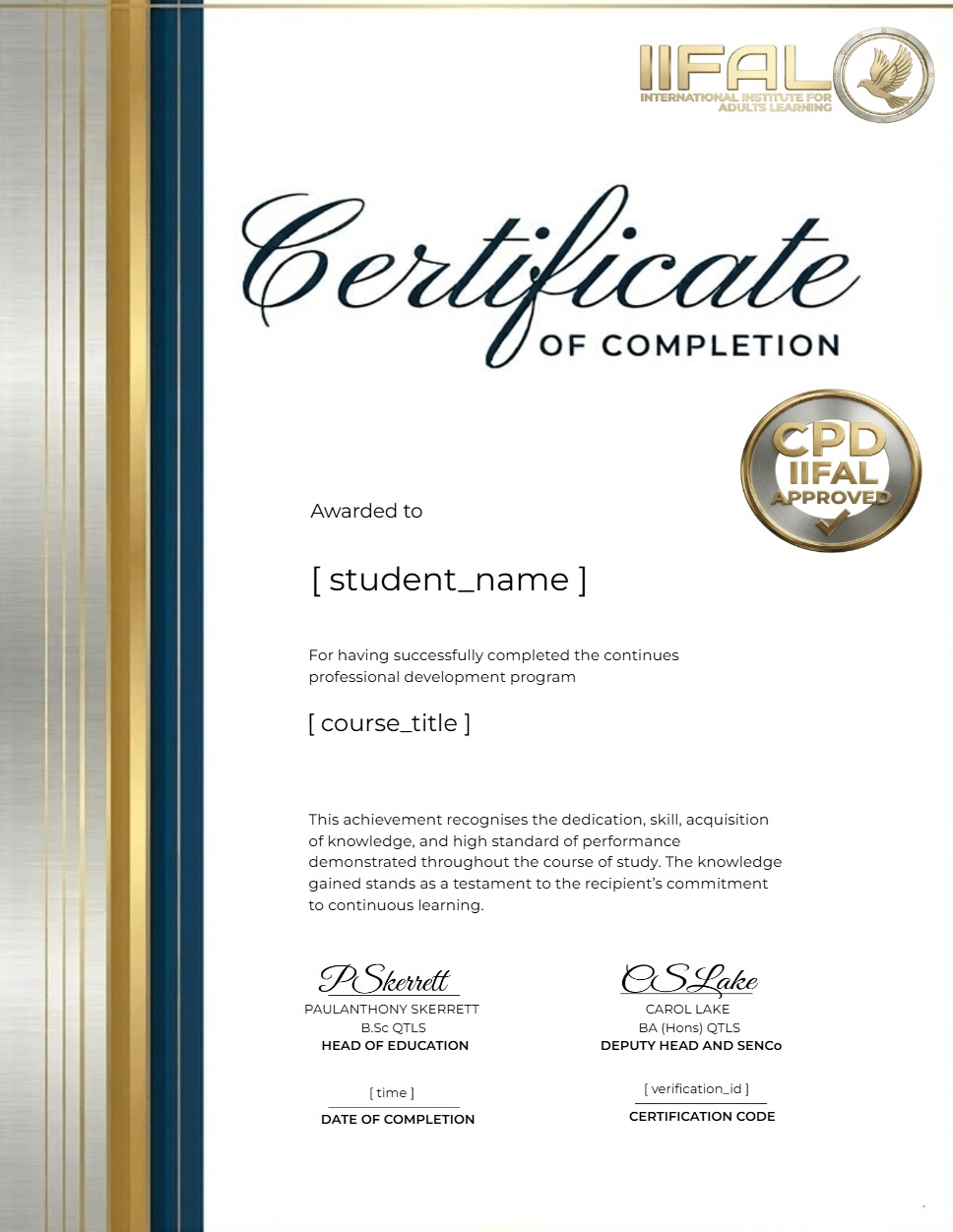

selected template

Student Ratings & Reviews

4.0
Total 1 Rating
5
0 Rating
4
1 Rating
3
0 Rating
2
0 Rating
1
0 Rating
AA
12 hours ago
I actually knew more than I thought I did, but still learnt a lot

Want to receive push notifications for all major on-site activities?