
IIFAL Functional Skills Mathematics – Entry Level 3

Wishlist Share

About Course

This Entry Level 3 Functional Skills Mathematics course is designed for adult learners who want to build confidence and competence in using maths in everyday life and work-related situations. It develops essential numeracy skills through practical, real-world contexts, helping learners apply mathematics to problems they are likely to encounter at home, in the workplace, and in the community.

The course covers key areas including number skills (such as addition, subtraction, multiplication, division, fractions, and decimals), measures (including money, time, and practical measurement), shape and space, and data handling. Learners will also develop their ability to interpret information from charts, tables, and diagrams, and to use mathematical reasoning to solve simple one-step problems.

By the end of the course, learners will be able to work more confidently with numbers up to 1000, carry out calculations accurately, understand and use fractions and decimals, and apply maths to everyday tasks such as budgeting, measuring, and interpreting data.

This qualification also provides a clear progression route to Level 1 Functional Skills Mathematics and supports further study, employment, and improved independence in daily life.

Show More

What Will You Learn?

  • Develop confidence with numbers up to 1000
  • Use addition, subtraction, multiplication, and division methods accurately
  • Understand and apply fractions and decimals in everyday situations
  • Recognise and continue number and decimal sequences
  • Use rounding and estimation to check answers
  • Solve practical maths problems using real-life examples
  • Interpret mathematical information from tables, charts, and diagrams
  • Apply maths skills confidently in workplace and daily life situations

Course Content

Numbers to 1000
Learners develop confidence with place value, reading, writing, ordering, and comparing whole numbers up to 1000. This forms the foundation for all later calculation skills and everyday numeracy.

  • Place value and number comparison

Addition of 3-Digit Numbers
Focuses on adding 3-digit numbers using mental and written methods, including column addition. Learners build accuracy and begin checking answers for reasonableness.

Subtraction of 3-Digit Numbers
Learners practise subtracting 3-digit numbers using formal methods, including borrowing. Real-life contexts such as money and measurements are included to strengthen understanding.

Mastering Multiplication
Introduces and develops multiplication skills, including multiplying 2-digit numbers by single and double digits. Learners build fluency through repeated practice and real-world application.

Division with Remainders
Learners explore division of 3-digit numbers by single and double digits, including interpreting remainders. Emphasis is placed on practical meaning in everyday situations.

Rounding and Estimation
Covers rounding numbers to the nearest 10 and 100, along with estimation strategies. Learners develop skills to check answers and make sensible approximations in real-life contexts.

Number Sequences in Daily Life
Learners identify, continue, and describe number patterns and sequences, including increasing and decreasing patterns. Links are made to real-life contexts such as time, money, and measurements.

Understanding Fractions in Daily Life
Introduces fractions such as halves, thirds, quarters, fifths, and tenths. Learners recognise, compare, and use fractions in practical situations like sharing, cooking, and measurement.

Decimals in Everyday Life
Learners understand decimals up to two decimal places, linking them to money and measurements. Focus is on reading, writing, and interpreting decimal values in everyday contexts.

Decimal Sequences and Comparison
Builds on decimal knowledge by exploring sequences, ordering, and comparing decimals. Learners strengthen understanding of place value in decimal numbers.

Solving Mixed Number Problems
Learners combine different mathematical skills to solve one-step and simple mixed problems involving whole numbers, fractions, and decimals in familiar contexts.

Mastering Maths in the Workplace
Applies all prior learning to workplace scenarios such as timekeeping, budgeting, measuring, and interpreting information. Focus is on practical problem solving and real-world application.

Functional Skills Maths Entry Level 3 Assessment & Resources

Earn a certificate

Add this certificate to your resume to demonstrate your skills & increase your chances of getting noticed.
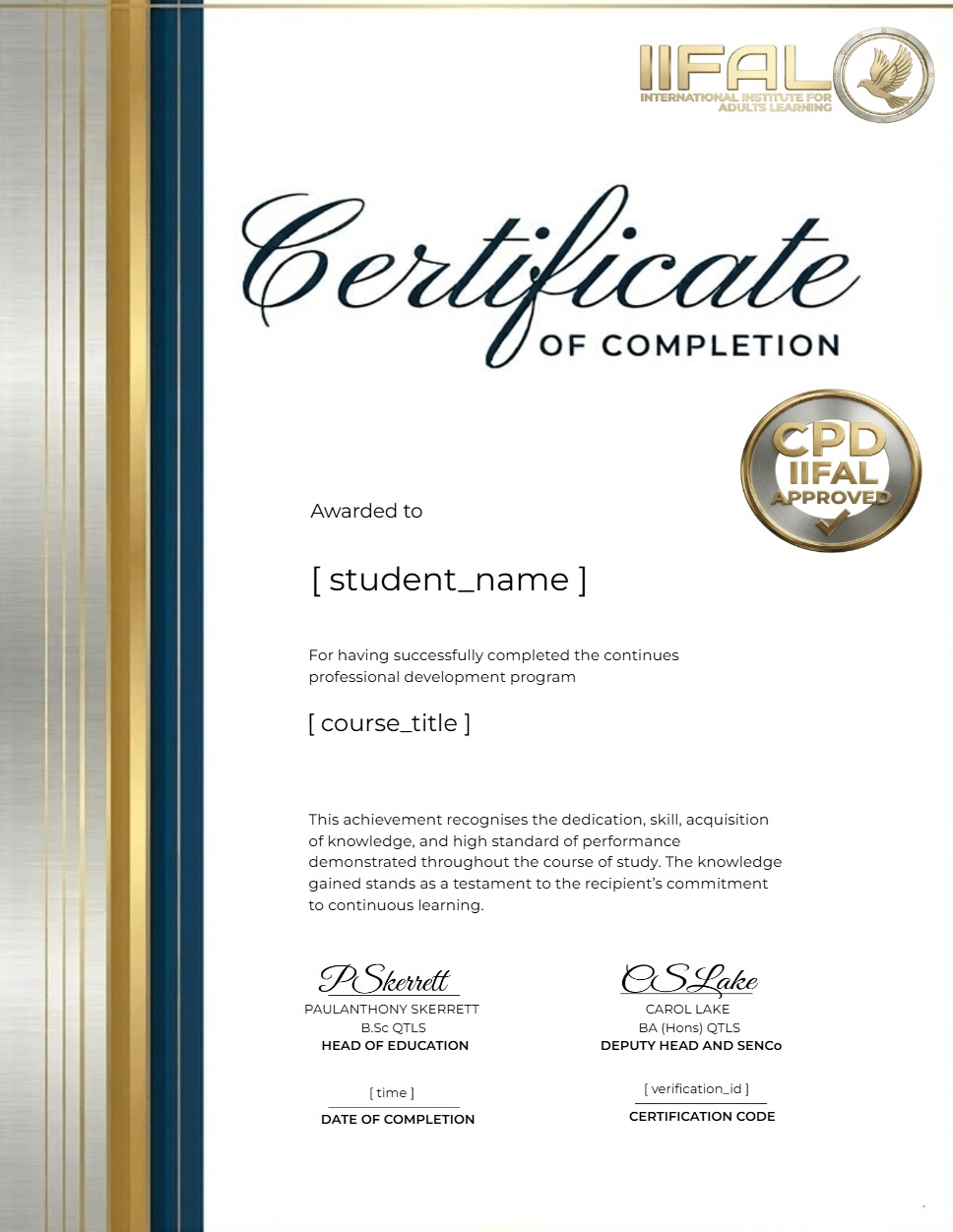
selected template

Student Ratings & Reviews

No Review Yet
No Review Yet