

High-Risk Youth Mentoring & Engagement

About Course

Working with young people who are involved in or vulnerable to criminal exploitation, violence, trauma or high-risk behaviour requires more than goodwill — it requires specialist knowledge, trauma-aware practice, consistent boundaries, cultural competence, and the ability to engage safely without escalating risk. This CPD course equips practitioners, mentors and youth-facing professionals with the tools and confidence needed to build trust, manage complex behaviour, maintain safe practice, and support high-risk young people effectively.

This training draws on lived experience, evidence-based models, trauma theory, safeguarding principles and real-world frontline learning from youth work, criminal justice, education, mental health and community practice.

Show More

What Will You Learn?

  • This comprehensive course will equip you with the trauma-informed framework and advanced communication skills necessary to mentor and safeguard high-risk adolescents effectively. The core learning objectives are to teach you how to shift your practice from simply managing behaviour to building sustained, internal resilience in youth.
  • Trauma & Identity (Module 1): Understand the root causes of risk (Trauma, Inequality, Identity, Belonging) and replace the "Risk Narrative" with the "Resistance Narrative" to identify the young person's strengths.
  • Relational Safety & Power Dynamics (Module 2): Master communication techniques to build trust, reduce fear, and actively minimize the inherent power differential in the mentor-youth relationship.
  • Boundaries & Professional Identity (Module 3): Learn to be relatable without becoming a "friend" and establish clear, ethical boundaries that protect both the young person from dependency and the practitioner from ethical breaches.
  • Safeguarding & Decision-Making (Module 4): Recognize high-risk indicators (e.g., exploitation, County Lines), apply the Defensible Decision-Making (DDM) framework, and adhere to mandatory reporting protocols.
  • Conflict & Repair (Module 5): Master de-escalation using the "Regulate, Relate, Reason" sequence and employ Motivational Dialogue (MD) and the OARS skills to foster self-driven change and repair trust after relational ruptures.
  • Sustainable Practice (Module 6): Develop strategies to recognize and mitigate vicarious trauma and burnout, and ensure all mentoring efforts lead to long-term independence, not dependency.

Course Content

Module 1: Understanding High-Risk Youth – Seeing Beyond the Behaviour
This module shifts the focus from judging high-risk behaviour to understanding its root function as a survival response. Core drivers include cumulative trauma, systemic inequality, and unmet needs for identity and belonging. We examine how ACEs compromise brain development, resulting in a hyperactive alarm system (amygdala) and poor impulse control (PFC). The module encourages adopting a resistance narrative over a risk narrative, validating the young person's inherent resilience and shifting the mentoring goal towards channeling that protective energy constructively.

  • Root causes of risk: trauma, inequality, identity and belonging
  • ACEs, Brain Development, and Behaviour
    06:02
  • Risk vs resistance narratives

Module 2 Summary: Trauma-Informed Engagement
This module focuses on building meaningful relationships by understanding how trauma impacts communication and trust. Trauma heightens the young person's sensitivity to perceived threat, shaping their behaviour and responses. Effective engagement requires mastering communication that prioritizes safety and avoids triggers, contrasting language that supports safety with language that causes shutdown. Furthermore, practitioners must be acutely aware of power dynamics, actively minimizing their authority and maximizing relational safety to ensure the young person feels respected, seen, and secure enough to participate in the mentoring process.

Module 3 Summary: Mentoring Boundaries & Professional Identity
This module focuses on establishing clear, ethical boundaries essential for safety and effectiveness. Practitioners must master the balance of being relatable to build rapport while firmly maintaining a professional identity, avoiding the harmful "friend" dynamic. The core purpose of boundaries is mutual protection, safeguarding the young person from dependency and the practitioner from burnout or ethical breaches. Key professional skills covered include understanding when to step back to foster independence, when to escalate for safeguarding, and how to disengage safely while maintaining clarity and defensible decision-making.

Module 4 Summary: Safeguarding and Decision-Making
This module provides the essential framework for protecting high-risk youth. It focuses on identifying subtle and overt indicators of exploitation and high-risk activity, such as grooming and County Lines involvement. A core skill is defensible decision-making, ensuring all actions taken regarding risk are rational, proportionate, and fully documented. Key procedural elements include high-quality case recording and mandatory reporting protocols. The module also emphasizes the necessity of multi-agency working and information sharing to ensure a holistic, protective network is in place around the young person.

Module 5 Summary: Communication for Conflict, Crisis & Repair
This module equips practitioners with advanced communication skills for high-stress scenarios. It details trauma-informed techniques for responding effectively to aggression, shutdown, or defiance, prioritizing de-escalation and safety over compliance. A core focus is Motivational Dialogue (MI) and strengths-based coaching to elicit the young person's inherent motivation for change, honoring their autonomy. Finally, the module covers the vital process of repairing relationships after rupture, emphasizing accountability, apology, and re-commitment to strengthen trust and model healthy conflict resolution.

Module 6 Summary: Sustainable Practice
This crucial module focuses on safeguarding the practitioner to ensure long-term effectiveness. It addresses the risks of vicarious trauma and burnout by providing strategies for self-care and emotional regulation. Sustainable practice is reinforced through structured reflection, clinical supervision, and accountability protocols, which are vital for maintaining professional boundaries and preventing personal harm. The ultimate goal is to build long-term pathways that foster the young person's self-reliance, ensuring mentoring leads to independence rather than reinforcing a harmful dependency on the professional.

Assessment
The course assessment structure ensures comprehensive learning and practical application. It includes a Knowledge Quiz to confirm mastery of core theoretical concepts (e.g., trauma, ACEs, boundaries). The Practical Scenario Reflection requires participants to analyze complex, real-world mentoring dilemmas, demonstrating their ability to apply trauma-informed, ethical decision-making. Finally, the Action Plan for Integrating Learning into Practice demands that participants translate theory into actionable professional steps, ensuring the skills and knowledge gained are effectively embedded into their ongoing work with high-risk youth.

Earn a certificate

Add this certificate to your resume to demonstrate your skills & increase your chances of getting noticed.
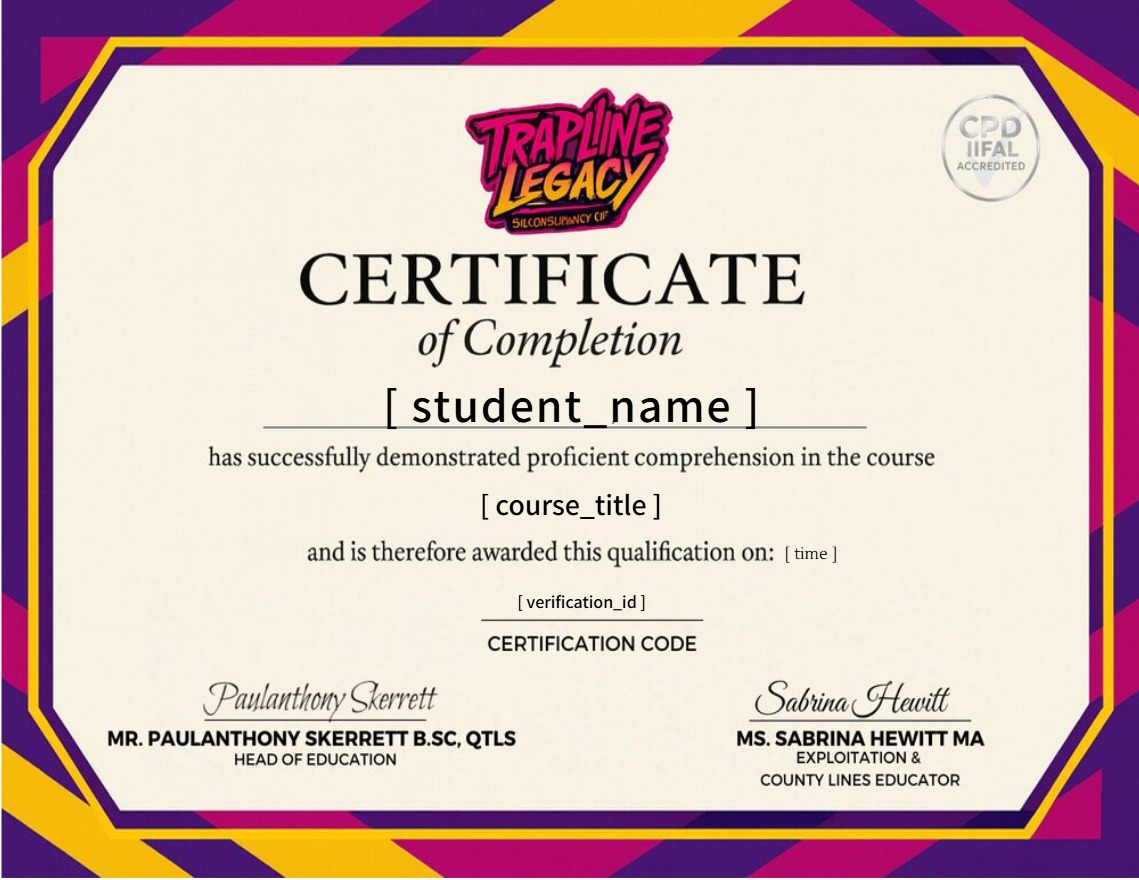
selected template

Student Ratings & Reviews

No Review Yet
No Review Yet