
5.00
(4 Ratings)

Trauma-Informed Safeguarding Practice

Wishlist Share
Share Course
Page Link
Share On Social Media

About Course

This course provides learners with a practical, trauma-informed approach to safeguarding children, young people, and adults at risk. It explores how trauma impacts behaviour, decision-making, communication, engagement, and risk. Learners will develop skills to ensure safeguarding responses are empathetic, safe, and effective.

What Will You Learn?

  • Define trauma and explain its impact on the brain, body, and behaviour.
  • Recognise trauma indicators, including “hidden” or masked presentations.
  • Apply trauma-informed principles to safeguarding practice.
  • Communicate with traumatised individuals safely and sensitively.
  • Identify re-traumatisation risks within professional systems.
  • Use trauma-informed risk assessment and defensible decision-making.
  • Respond appropriately to trauma-linked disclosures or safeguarding concerns.
  • Record, report, and escalate trauma-related safeguarding issues effectively.

Course Content

Module 1 — Understanding Trauma
What is trauma? Types of trauma: single-incident, chronic, complex, developmental, intergenerational Trauma vs. stress How trauma affects the brain (fight, flight, freeze, fawn) Behaviour as communication Short video: “The Brain Under Stress” (animation clip recommended)

  • What is trauma?
  • Types of trauma: single-incident, chronic, complex, developmental, intergenerational
  • Trauma vs. Stress
  • How trauma affects the brain (fight, flight, freeze, fawn)
  • Behaviour as communication
  • Short video: “The Brain Under Stress”
  • Quick Check: Match Symptoms to Trauma Responses
  • Reflective Task: What Might Be Happening Internally?

Module 2 — Trauma and Behaviour in Safeguarding
Why traumatised children and adults may appear challenging or resistant Links between trauma, exploitation, avoidance, and risk-taking Trauma triggers and sensory overload Shame, fear, and mistrust in engagement

Module 3 — Principles of Trauma-Informed Practice
The 6 principles: Safety Trustworthiness & Transparency Choice Collaboration Empowerment Cultural, Gender & Lived-Experience SensitivityImplementing these in safeguarding conversations Avoiding power-based interactions Professional curiosity through a trauma lens

Module 4 — Communication with Traumatised Individuals
Do’s and don’ts of trauma-informed communication Using curiosity without interrogation De-escalation and grounding techniques Managing emotional distress safely What NOT to say: language that blames, minimises, or triggers

Module 5 — Trauma, Safeguarding & Re-traumatisation
How systems unintentionally re-traumatise people Barriers created by rigid processes, deadlines, and risk assessments Trauma-informed risk evaluation Working with multi-agency partners who may not be trauma-informed Case escalation & defensible decision-making

Module 6 — Responding to Trauma-Linked Safeguarding Concerns
How trauma affects disclosure Indicators of exploitation, grooming, coercion Trauma-informed safeguarding pathways Trauma-sensitive recording & reporting Duty to intervene & escalate Building safety plans that consider trauma

Trauma-Informed Safeguarding: Knowledge, Practice, and Professional Responsibility
This quiz assesses your understanding of trauma-informed safeguarding and your ability to apply professional responsibility in real-world contexts. It draws on learning from all six modules, including how trauma affects behaviour and disclosure, how to recognise safeguarding concerns, and how to respond safely and ethically.You will be tested on your knowledge of trauma-informed practice, communication, recording and reporting concerns, escalation procedures, and the development of trauma-aware safety plans. The quiz focuses on practical decision-making, safeguarding judgement, and reducing the risk of re-traumatisation.A minimum score of 70% is required to pass and achieve certification. You are allowed two attempts to demonstrate your understanding and competence.

Earn a certificate

Add this certificate to your resume to demonstrate your skills & increase your chances of getting noticed.
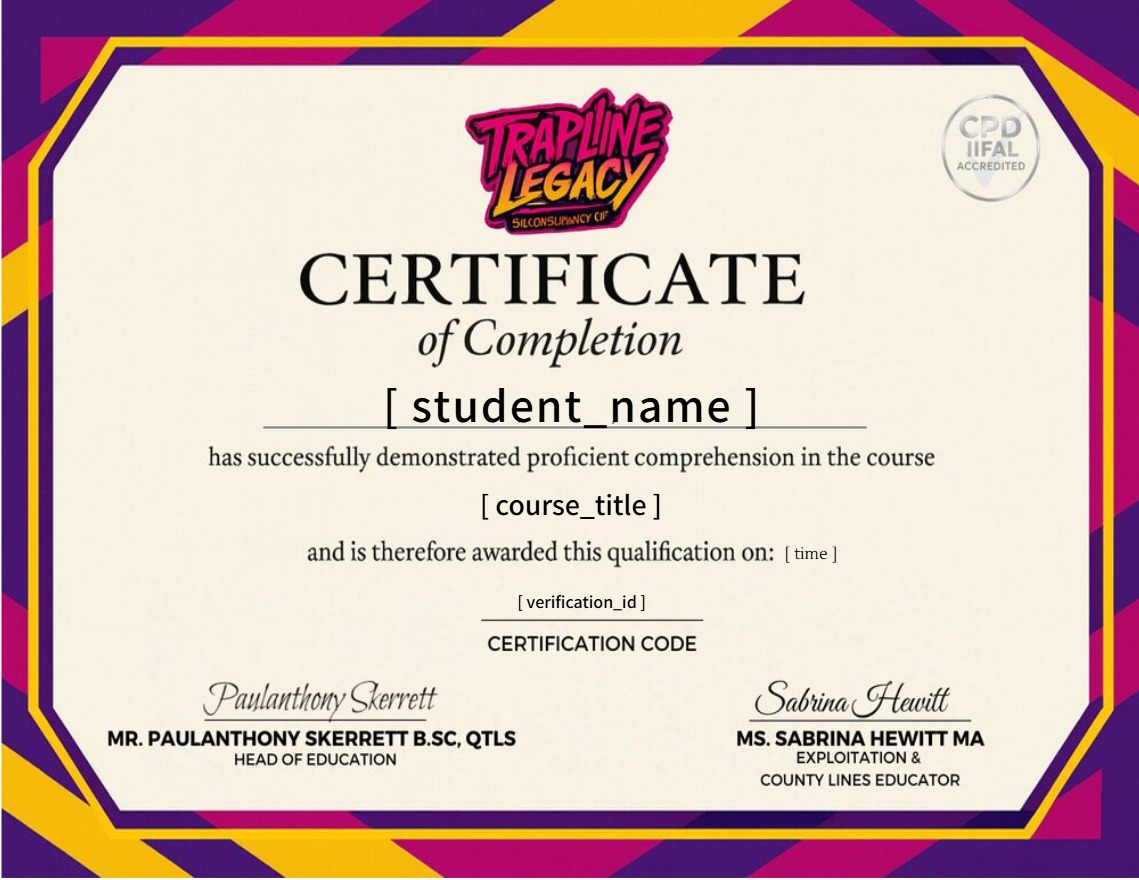
selected template

Student Ratings & Reviews

5.0
Total 4 Ratings
5
4 Ratings
4
0 Rating
3
0 Rating
2
0 Rating
1
0 Rating
CC
4 weeks ago
Very informative course. There was so much I didn't know. Easy to save and come back to in your own time. I would definitely recommend to someone newly studying this topic or someone that needs a refresher.
CT
1 month ago
great !
HF
2 months ago
Such an in depth course - full of so much knowledge and safeguarding practice to take away ! Highly recommend.
KD
2 months ago
Amazing, insightful and informative